

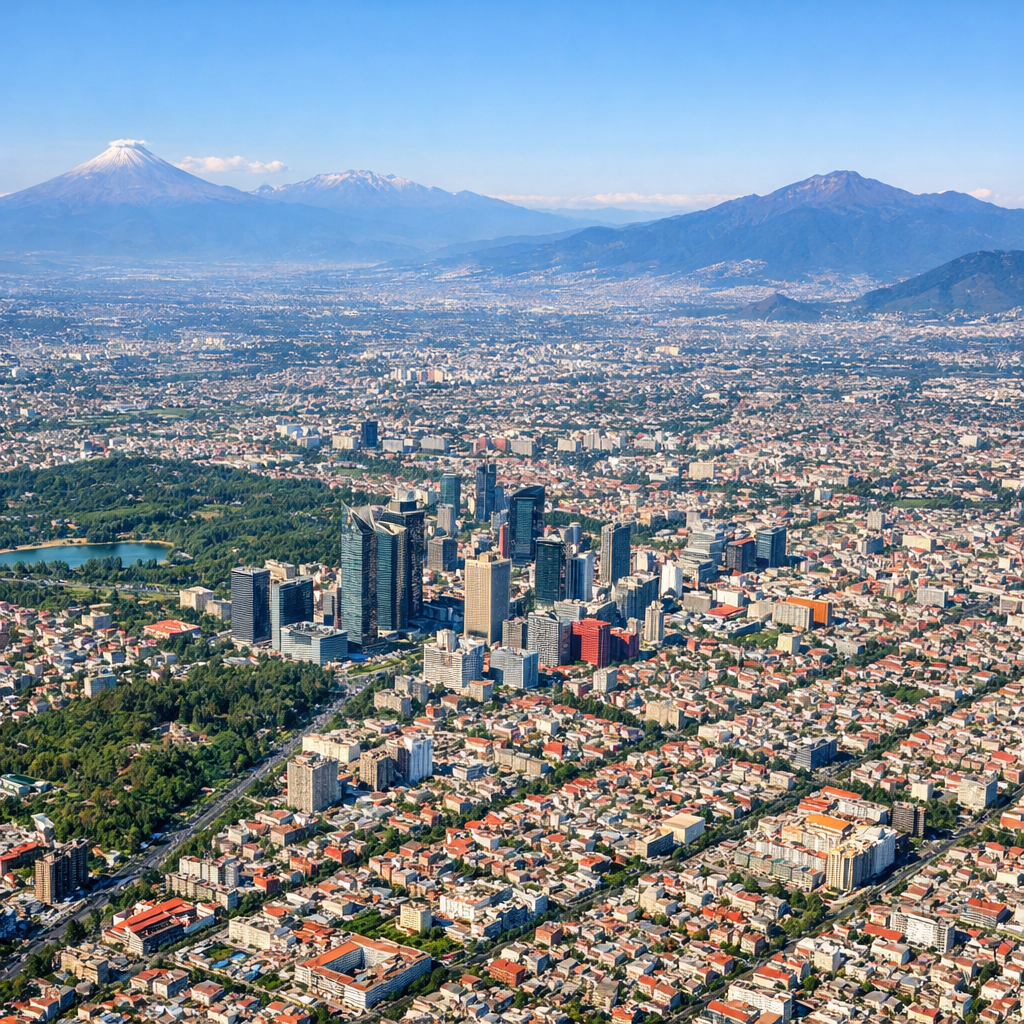
Mexico City, situated at an elevation of approximately 2,240 meters (7,350 feet) above sea level, experiences a subtropical highland climate characterized by mild temperatures year-round. The city’s climate is divided into two main seasons: a dry season from November through April and a rainy season from May through October. During the dry season, temperatures are cooler, with average daytime highs around 21°C (70°F) in January. The rainy season brings warmer temperatures, peaking in May with average highs of 26°C (79°F), accompanied by increased humidity and frequent afternoon showers.
Despite its favorable climate, Mexico City faces significant environmental challenges. Air pollution remains a critical issue, primarily due to vehicular emissions from the millions of cars on the road daily. This pollution has been linked to various health problems, including respiratory infections, cardiovascular diseases, and neurological disorders. In 2024, the city recorded nine environmental contingencies due to high ozone levels, the highest number since 1993.
Another pressing concern is land subsidence. The over-extraction of groundwater has led to the city sinking at alarming rates, with some areas experiencing subsidence of up to 35 centimeters (14 inches) per year. This phenomenon damages infrastructure, including roads and buildings, and exacerbates flooding risks during the rainy season. Recent satellite data from the NISAR mission have provided detailed insights into these subsidence patterns, highlighting the need for sustainable water management practices.
Addressing these environmental challenges requires a multifaceted approach, including improving public transportation to reduce vehicular emissions, implementing stricter regulations on industrial pollutants, and promoting water conservation efforts to mitigate land subsidence. Public awareness and community engagement are also crucial in fostering a sustainable future for Mexico City.