

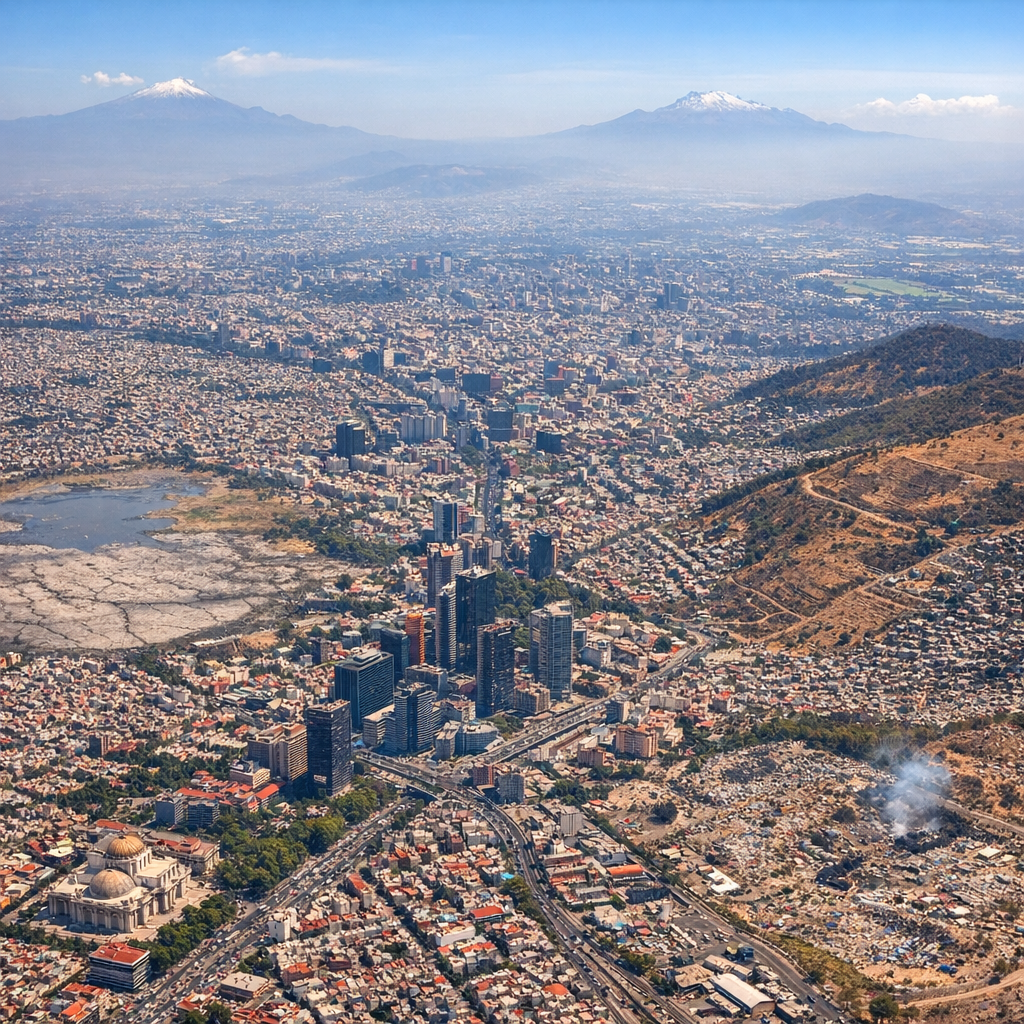
As Mexico City continues to evolve, global events are leaving a significant imprint on its urban fabric and the lives of its residents. From environmental challenges to international sports events, the city’s landscape is being reshaped in profound ways.
Environmental Challenges: The Sinking City
Recent satellite data has revealed that Mexico City is subsiding at an alarming rate—up to 14 inches (35 cm) per year. This phenomenon, primarily due to excessive groundwater extraction and the compression of soft sediment layers beneath the city, poses a serious threat to infrastructure and daily life. Iconic landmarks, such as the Angel of Independence monument, have been affected, necessitating structural adjustments to accommodate the sinking ground. The NISAR satellite mission, a collaboration between NASA and the Indian Space Research Organisation, has provided high-resolution radar images that underscore the urgency of addressing this issue. [Source: Space.com]
Climate Change: A Warming Metropolis
Mexico is experiencing a temperature increase of 1.9°C compared to pre-industrial levels, surpassing the global average. This accelerated warming trend has significant implications for the country’s ecosystems, water resources, agriculture, and public health. Francisco Estrada Porrúa, a climate expert from the National Autonomous University of Mexico (UNAM), emphasizes the need for a new paradigm that prioritizes adaptation, mitigation, and compensation for the effects of climate change. [Source: El País]
2026 FIFA World Cup: Transforming the Urban Landscape
As Mexico City prepares to co-host the 2026 FIFA World Cup, extensive urban renovations are underway. The historic Estadio Azteca is undergoing significant upgrades, including increasing its capacity to 87,500 and repairing its roof, with reopening planned for March 2026. These enhancements aim to provide a world-class experience for both players and fans. [Source: FourFourTwo]
However, these developments have also led to challenges for certain segments of the population. Informal workers, including street vendors and sex workers, have faced displacement and reduced income due to construction projects and urban beautification efforts. While city officials have promised support and designated zones for continued work, affected individuals report not receiving meaningful assistance. This situation highlights the need for inclusive planning that considers the livelihoods of all residents. [Source: AP News]
Looking Ahead
Mexico City’s engagement with global events presents both opportunities and challenges. While international collaborations and events can drive development and modernization, it is crucial to ensure that these changes are sustainable and equitable. Addressing environmental issues like subsidence and climate change requires coordinated efforts at both local and global levels. Similarly, urban development projects should be implemented with consideration for all residents, ensuring that progress does not come at the expense of the city’s most vulnerable populations.
As we navigate these global influences, the resilience and adaptability of Mexico City’s communities will be key in shaping a future that honors the city’s rich heritage while embracing the possibilities of a connected world.