

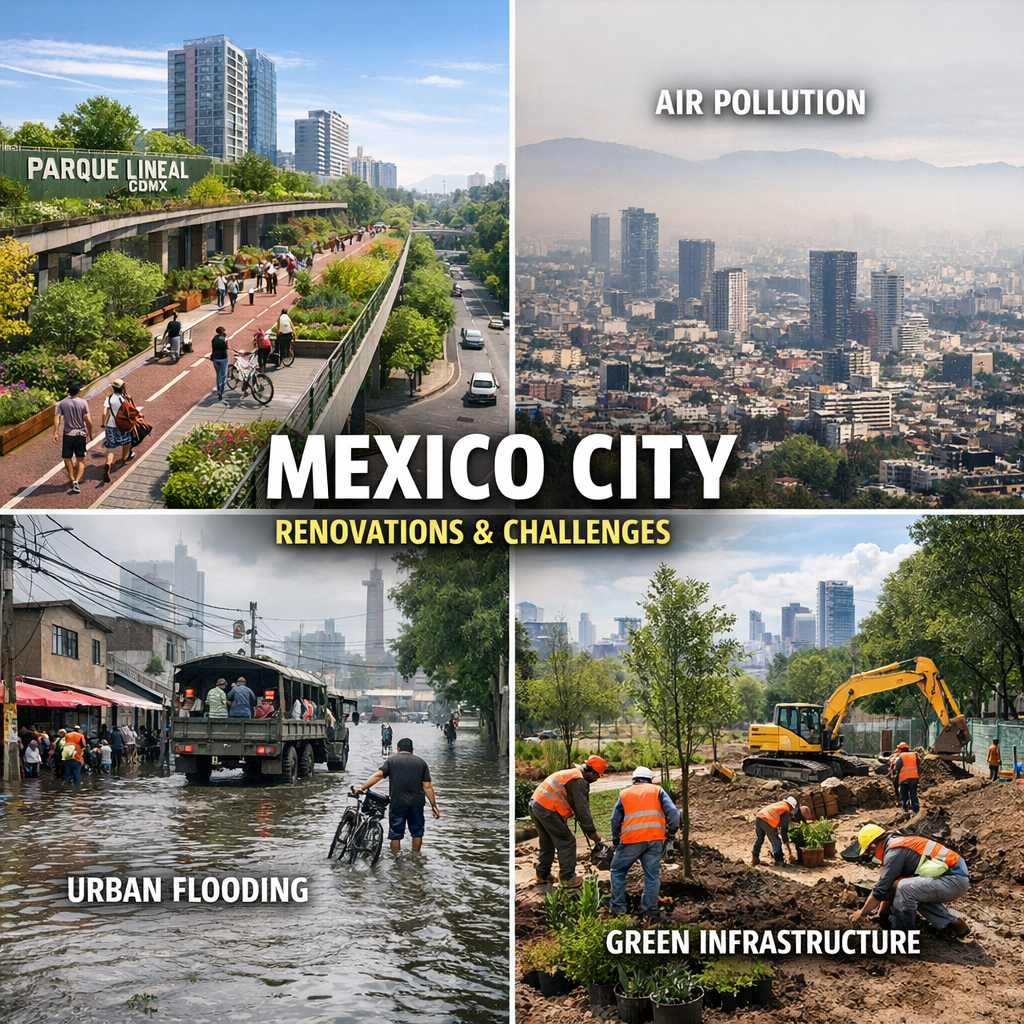
As Mexico City prepares to host the 2026 FIFA World Cup, the city is undergoing significant transformations. The government has initiated extensive urban renovations, particularly around the Estadio Azteca, to accommodate the influx of international visitors. These projects aim to modernize infrastructure and enhance the city’s global image. However, they have also led to the displacement of informal workers, including street vendors and sex workers, who rely on these areas for their livelihoods. Many report reduced incomes and a lack of adequate support during this transition period. Source
In addition to urban changes, Mexico City faces environmental challenges. Recent satellite data reveals that the city is sinking at an alarming rate—up to 10 inches (25 cm) per year. This subsidence is primarily due to excessive groundwater extraction and the city’s foundation on a drained lake bed. The phenomenon poses risks to infrastructure, including roads and water systems, and underscores the need for sustainable water management practices. Source
Furthermore, climate change is impacting Mexico more severely than the global average. The country has experienced a temperature increase of 1.9°C since pre-industrial times, surpassing the global average. This rapid warming threatens biodiversity, water resources, and agriculture, with potential economic impacts equivalent to losing six times the current GDP. Experts advocate for a “net zero damages” approach, emphasizing adaptation, mitigation, and compensation strategies to address these challenges. Source
These global events are reshaping Mexico City’s landscape and daily life. While international attention brings opportunities for development and modernization, it also presents challenges that require inclusive and sustainable solutions to ensure the well-being of all residents.