

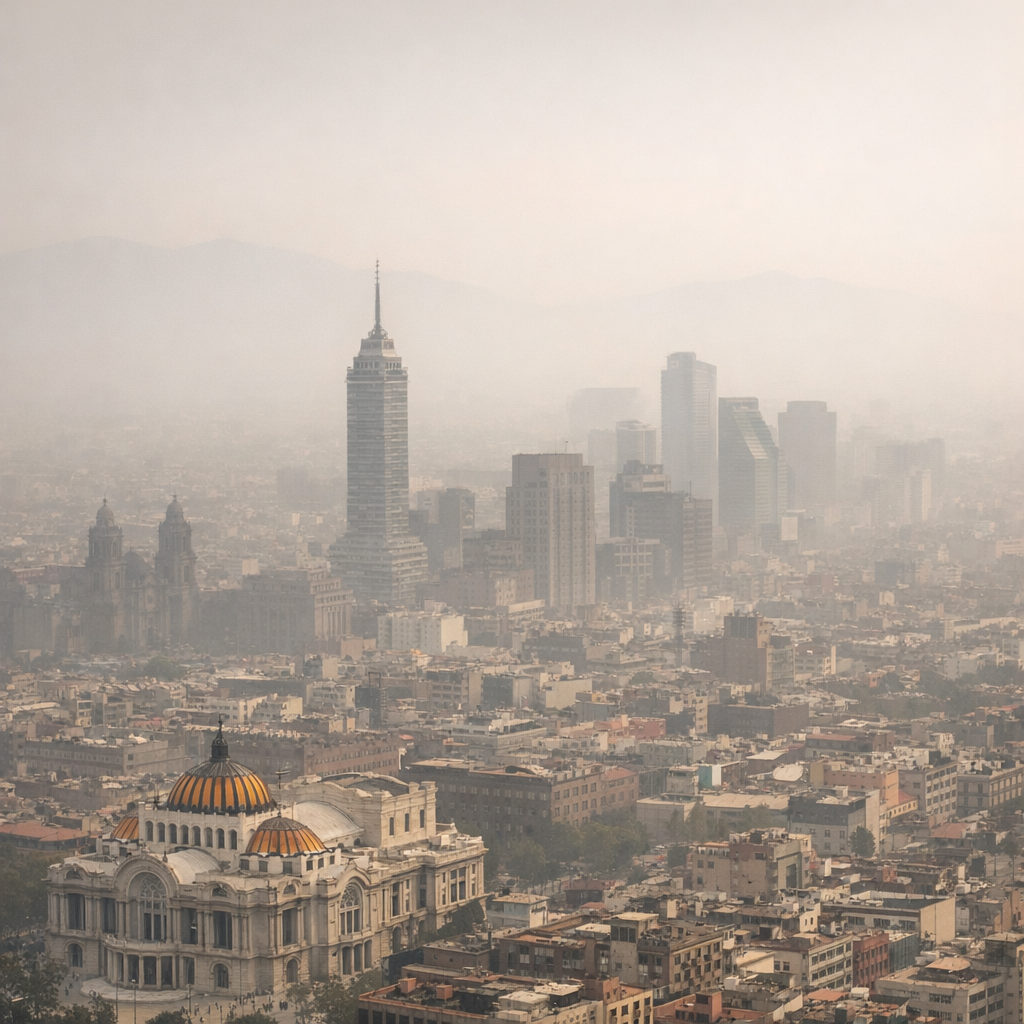
Mexico City, nestled in a basin surrounded by mountains, faces significant challenges in maintaining good air quality. The city’s unique geography, combined with high vehicular traffic and industrial activities, contributes to the accumulation of pollutants, leading to frequent air quality concerns.
Air Quality Challenges
The primary pollutants affecting Mexico City include ozone (O₃) and particulate matter (PM₁₀ and PM₂.₅). Ozone levels tend to peak between February and June, while particulate matter concentrations are higher during December and January, often due to biomass burning. These pollutants can exceed the limits established by health authorities, prompting the activation of environmental contingencies to protect public health.
Health Impacts
Exposure to elevated levels of air pollutants has been linked to various health issues. Studies have documented that prolonged exposure can lead to headaches, respiratory infections, lung damage, depression, anxiety, and cardiovascular diseases. Vulnerable populations, such as children and the elderly, are particularly at risk.
Mitigation Efforts
To address these challenges, Mexico City has implemented several measures, including the ‘Hoy No Circula’ program, which restricts vehicle use based on license plate numbers to reduce emissions. Additionally, the city monitors air quality in real-time, providing residents with up-to-date information and health recommendations. Despite these efforts, experts emphasize the need for stricter control measures and preventive actions to further improve air quality and safeguard public health.
Understanding the factors contributing to air pollution and its health impacts is crucial for developing effective strategies to enhance the quality of life for Mexico City’s residents.