

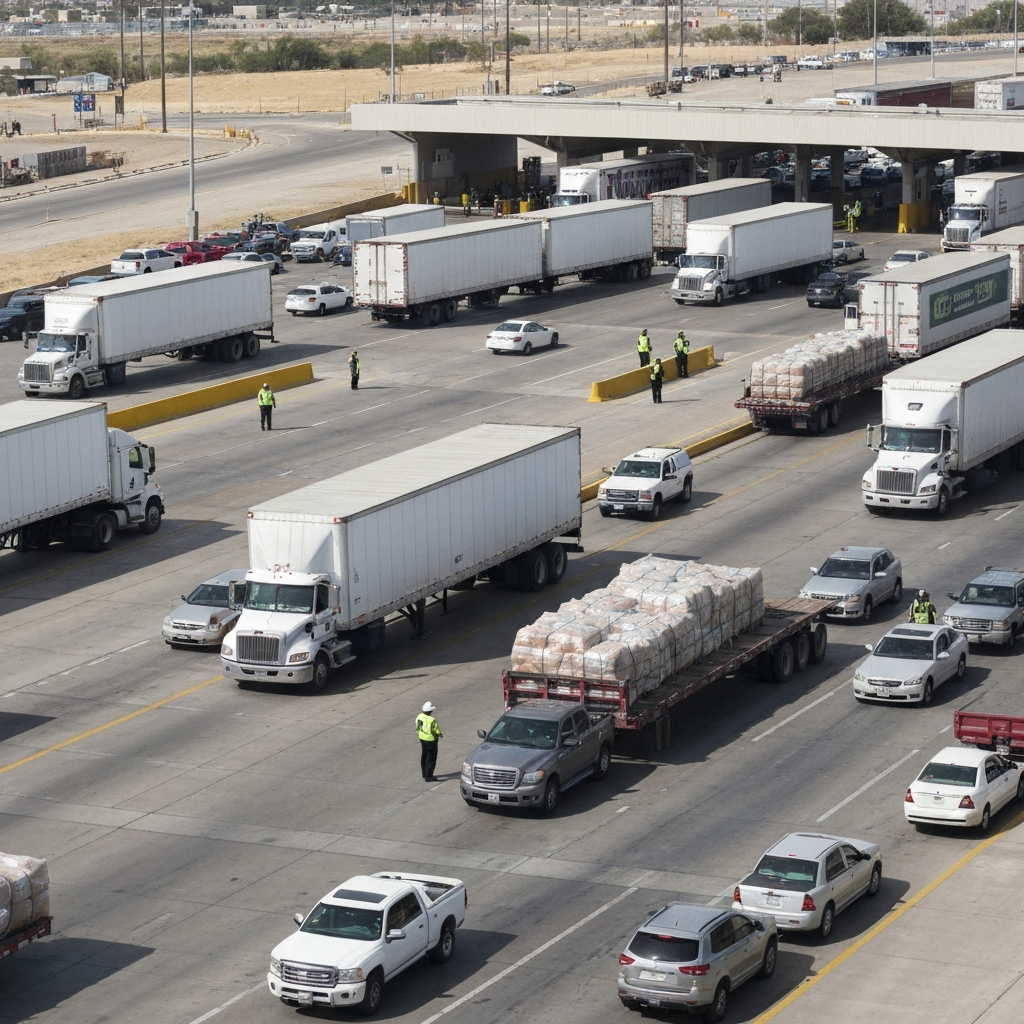
The trade relationship between the United States and Mexico stands as one of the most significant and dynamic economic partnerships globally. This enduring alliance has evolved over decades, fostering economic growth and integration for both nations.
Historical Context and Agreements
Since the implementation of the North American Free Trade Agreement (NAFTA) in 1994, and its successor, the United States-Mexico-Canada Agreement (USMCA) in 2020, trade between the two countries has flourished. These agreements have facilitated the elimination of tariffs on numerous goods and services, promoting a freer flow of commerce across borders. The USMCA, in particular, modernized trade relations by strengthening rules of origin, enhancing labor and environmental protections, and incorporating provisions for digital trade.
Trade Volume and Economic Impact
In recent years, Mexico has emerged as the United States’ largest trading partner. In 2024, the total trade in goods and services between the two nations reached an estimated $935 billion, underscoring the depth of their economic ties.
Mexico’s exports to the U.S. encompass a diverse range of products, including vehicles, machinery, electrical equipment, and agricultural goods. Conversely, the U.S. exports to Mexico feature electronics, vehicles, fuels, minerals, plastics, and machinery. This reciprocal trade supports millions of jobs and contributes significantly to the GDP of both countries.
Key Sectors and Supply Chain Integration
The automotive industry exemplifies the deep integration of supply chains between the U.S. and Mexico. Major American automakers have established manufacturing facilities in Mexico, leveraging cost efficiencies and proximity to the U.S. market. This collaboration has led to the co-production of vehicles and components, benefiting consumers with a variety of affordable options.
Agriculture is another vital sector, with Mexico being a major participant in international agricultural trade. In 2025, Mexico’s agricultural exports totaled about $45.7 billion, with the United States being the largest trading partner, buying approximately 89% of Mexican agricultural exports.
Challenges and Future Outlook
Despite the robust trade relationship, challenges persist. Policy changes, such as the imposition of tariffs and shifts in immigration policies, can impact trade dynamics. For instance, recent U.S. immigration policies have affected remittances to Mexico, as rising prices and policy changes influence the financial stability of Mexican nationals working in the U.S.
Looking ahead, both nations continue to navigate the complexities of their economic relationship. Ongoing dialogue and cooperation are essential to address challenges and capitalize on opportunities for mutual growth. The upcoming joint review process of the USMCA, scheduled for July 2026, will be a critical juncture to assess and potentially recalibrate the trade agreement to better serve the evolving needs of both countries.
In conclusion, the U.S.-Mexico trade relationship remains a cornerstone of economic activity in North America. Its continued success hinges on collaborative efforts to foster a fair and balanced trade environment that benefits both nations.