

In an increasingly interconnected world, global economic trends significantly influence national economies. For Mexico, understanding these dynamics is crucial, given its strategic position and deep integration into international markets.
Trade Relations and External Pressures
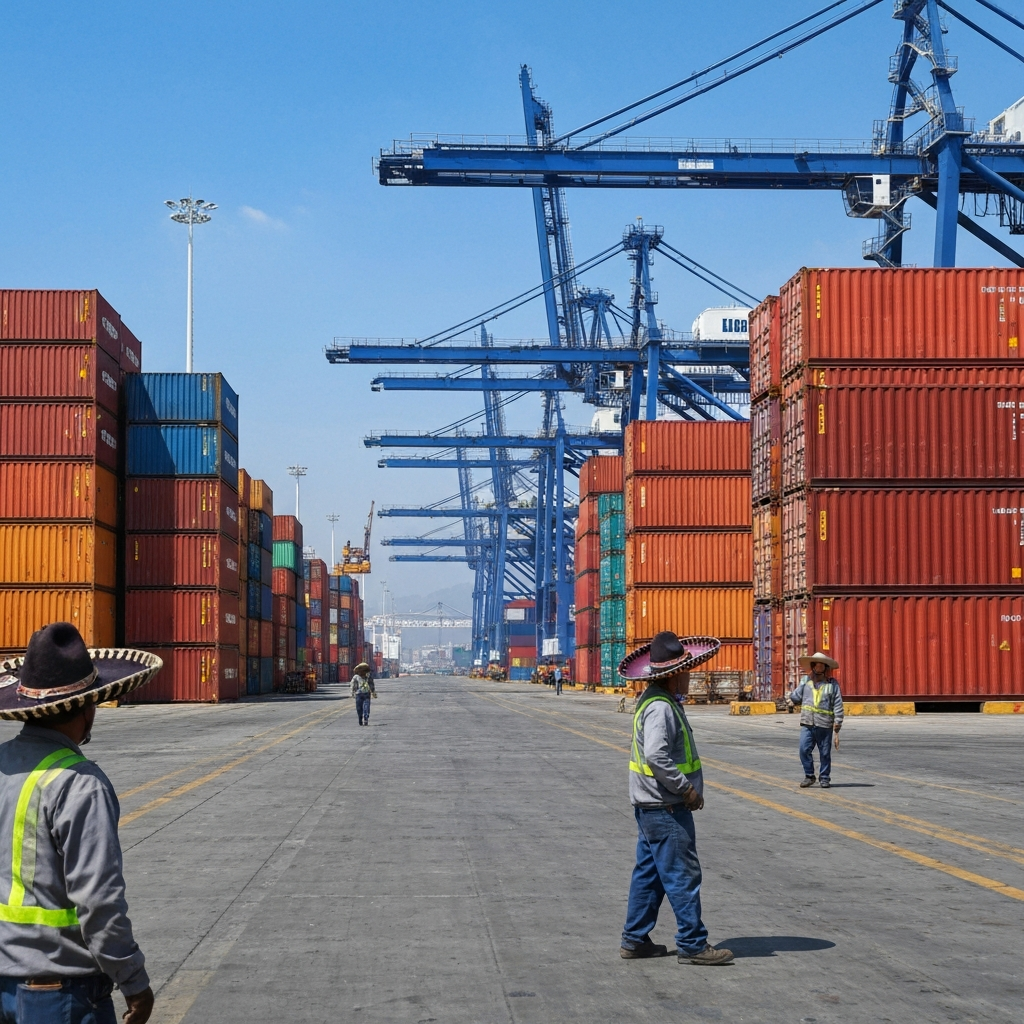
Mexico’s economy is closely tied to global trade, particularly with the United States. Recent shifts in U.S. trade policies, including the imposition of tariffs on key exports like automotive and electronics, have introduced uncertainties. These measures have dampened export growth and heightened concerns about the future of trade agreements such as the United States-Mexico-Canada Agreement (USMCA). The upcoming midyear review of the USMCA adds another layer of uncertainty, potentially affecting investor confidence and economic stability.
Foreign Direct Investment and Nearshoring
Despite external challenges, Mexico has experienced a surge in foreign direct investment (FDI). In 2025, the country attracted a record $40.9 billion in FDI, marking a 10.8% increase from the previous year. This growth is largely driven by the nearshoring trend, where companies relocate operations closer to the U.S. market to mitigate supply chain disruptions. Mexico’s competitive manufacturing wages and proximity to the U.S. make it an attractive destination for such investments.
Monetary Policy and Inflation
The Bank of Mexico (Banxico) has adopted a monetary easing stance to stimulate economic growth. As of March 2026, the benchmark interest rate stands at 6.75%, with projections indicating further reductions to around 6.3–6.5% by year-end. However, inflation remains a concern, hovering around 4%, influenced by global energy price fluctuations and domestic factors. Balancing growth stimulation with inflation control remains a delicate task for policymakers.
Economic Outlook and Structural Challenges
Projections for Mexico’s economic growth in 2026 are modest, with estimates ranging from 1.2% to 1.8%. While domestic demand and remittances support consumption, private investment is subdued due to policy uncertainties and regulatory changes. Structural challenges, including a narrow tax base, high informality rates, and security concerns, continue to impede robust economic performance. Addressing these issues is essential for sustainable growth.
Conclusion
Global economic trends present both opportunities and challenges for Mexico. While external pressures like trade policy shifts and energy price volatility pose risks, the country’s strategic location and nearshoring momentum offer avenues for growth. Navigating these dynamics requires prudent policy decisions, structural reforms, and proactive engagement with international partners to ensure economic resilience and prosperity.